MEKAMIC
High-Quality Elevator Pulley Manufacturer
"Safe movement - Smooth circulation"
SUPPORT HOTLINE
+84 96 222 7155
MEKAMIC
High-Quality Elevator Pulley Manufacturer
"Safe movement - Smooth circulation"
SUPPORT HOTLINE
+84 96 222 7155

The pulley – within the cost structure of an elevator – is a component of low value, but the requirements for quality and stability during operation are highly demanding. The simple reason, aside from being related to movement, is the massive issues that arise when a defective pulley requires repair or replacement, something anyone in the industry is likely reluctant to encounter.
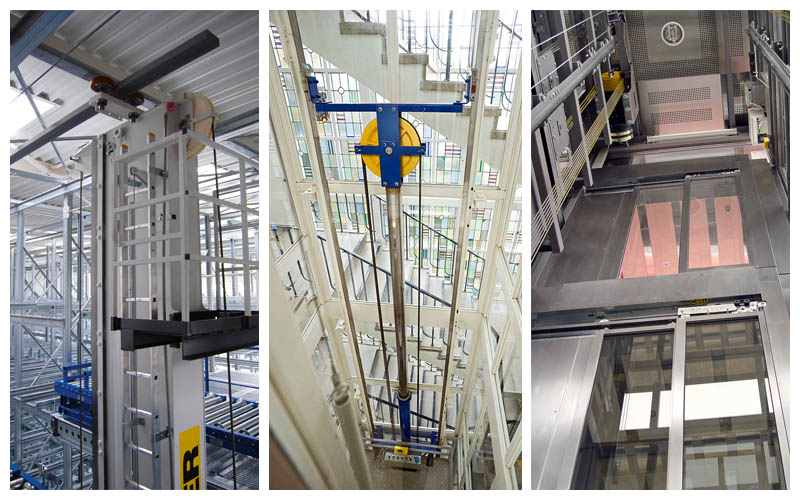
Elevator pulley manufacturing technology is not complex, but due to the specific requirements of the product, controlling stable quality throughout the production process requires strict compliance to produce a high-quality pulley.
Based on Mekamic’s years of experience in the mechanical manufacturing industry, there are 3 important factors when evaluating the quality of an elevator pulley, which are:
– Billet quality (cast iron)
– Machining accuracy
– Bearings and bearing assembly
Let’s examine each of these factors as follows:
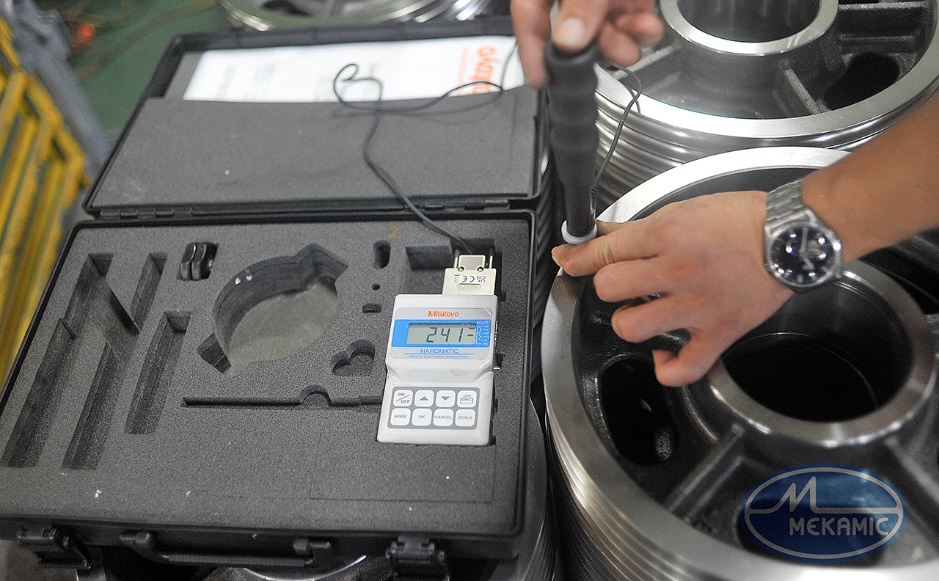
The cast iron grades commonly used for elevator pulleys are FC200 or FC250. According to JIS G-5501 standards: FC200 has a hardness of 223HB, and FC250 is 241HB. High hardness provides good wear resistance for the pulley and vice versa. According to Elevator World magazine, the pulley hardness should be between 190HB and 300HB. Pulley hardness also affects the tensile strength of the wire ropes.
Determining the cast iron grade requires specialized equipment (such as a spectrometer); however, a simpler method to evaluate it is by measuring the hardness of the cast iron. For this, you would also need a hardness tester.
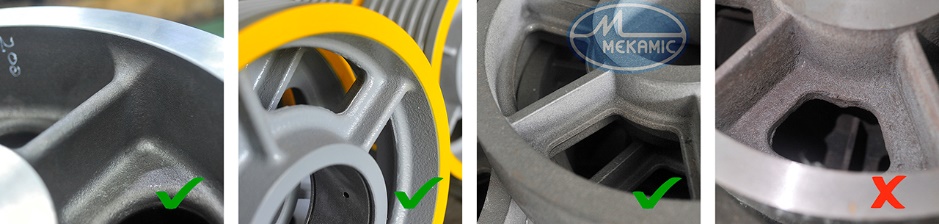
In addition, the quality of cast iron can also be evaluated visually: is the casting surface smooth and even? Are there any porosities? Has it been shot-blasted for cleaning and deburring? Although these factors are qualitative, they can help assess the casting technology, skill level, and scale. A good product usually comes with a good appearance.
The overall accuracy of a component or equipment largely depends on the accuracy of each constituent part, especially the assembly dimensions.
For elevator pulley products, attention should be paid to the following accuracies:
– Rope groove profile:
The manufacturer needs to ensure that the rope groove profile is machined according to standards (helping the rope to release and preventing it from being crushed during use). The rope groove surface must achieve the required roughness, with an even rope pitch.
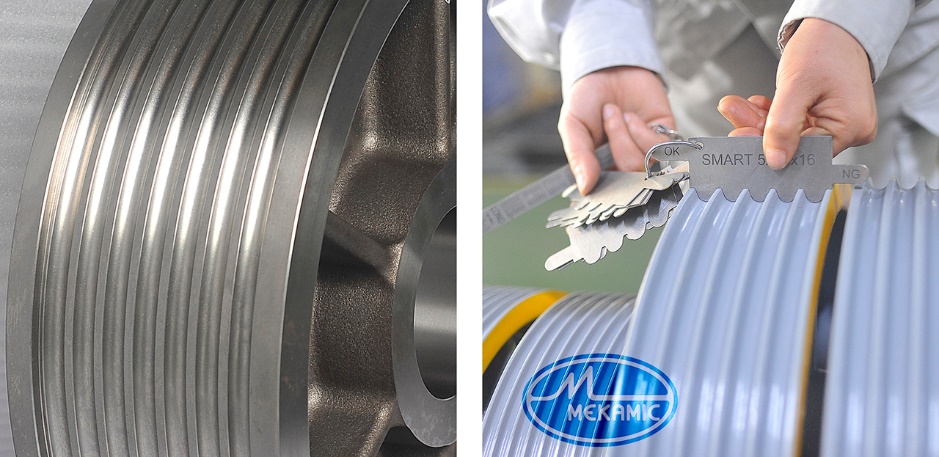
A simple way to check the rope groove profile is by using a profile gauge. Additionally, you can find out whether the manufacturer uses conventional lathes or CNC lathes for machining. Clearly, machining on a CNC machine will ensure better accuracy and uniformity than on a conventional machine.
– Bore and shaft journal dimensions at the bearing mounting position
Elevator pulleys are subject to cyclic loading, usually using an H7/p6 fit. Ensuring the bore and shaft tolerances at the bearing mounting position is crucial to ensure a stable fit, preventing the bearing races from being destroyed by deformation.
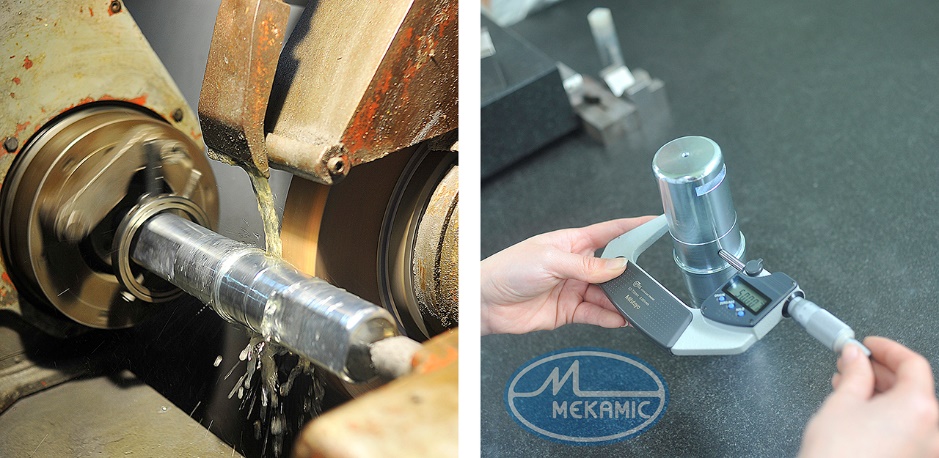
For shafts, an accuracy grade of 6 is usually achieved through cylindrical grinding. Therefore, ground versus unground shafts will yield significantly different pulley qualities.
Of course, the entire process must be strictly controlled through the measurement and quality monitoring procedures of each manufacturer, ensuring that dimensions fall within allowable tolerances and that quality is uniform across all products.
Bearings are a very important factor for pulley product quality, if not the most important factor, because the pulley manufacturer itself does not directly produce bearings.
An elevator pulley is a rather special product; it uses a relatively large shaft, but the rotation speed is slow (from 0.4~5m/s), with low dynamic loads. Because of this, elevator pulleys operate perfectly well with non-premium bearings. Aside from technical factors, the cost factor for a set of elevator pulleys on the market also dictates this.
However, precisely because of this, many suppliers use cheap bearings labeled with famous bearing brands such as SKF, NTN, KOYO, NSK. In reality, these bearings are imported from China, from OEM factories that have every brand available. This can be easily checked on e-commerce sites like alibaba.com or made-in-china.com, with prices starting at just $1. Meanwhile, corresponding genuine bearings from the famous brands mentioned above cost tens of dollars.
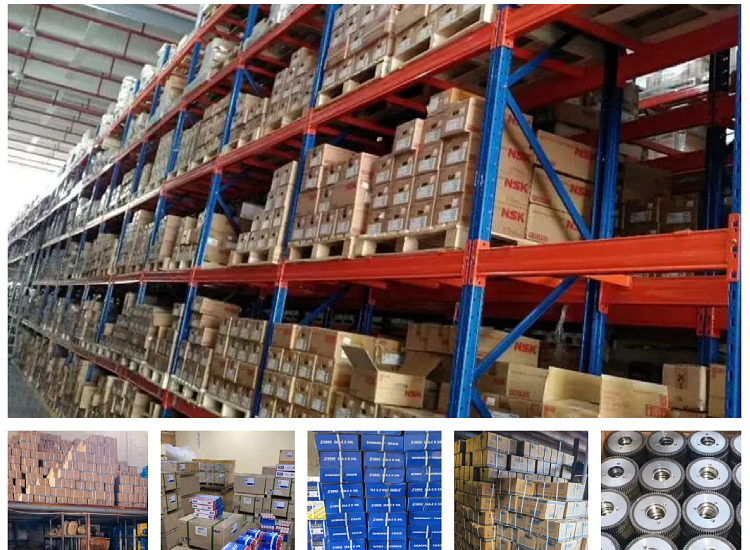
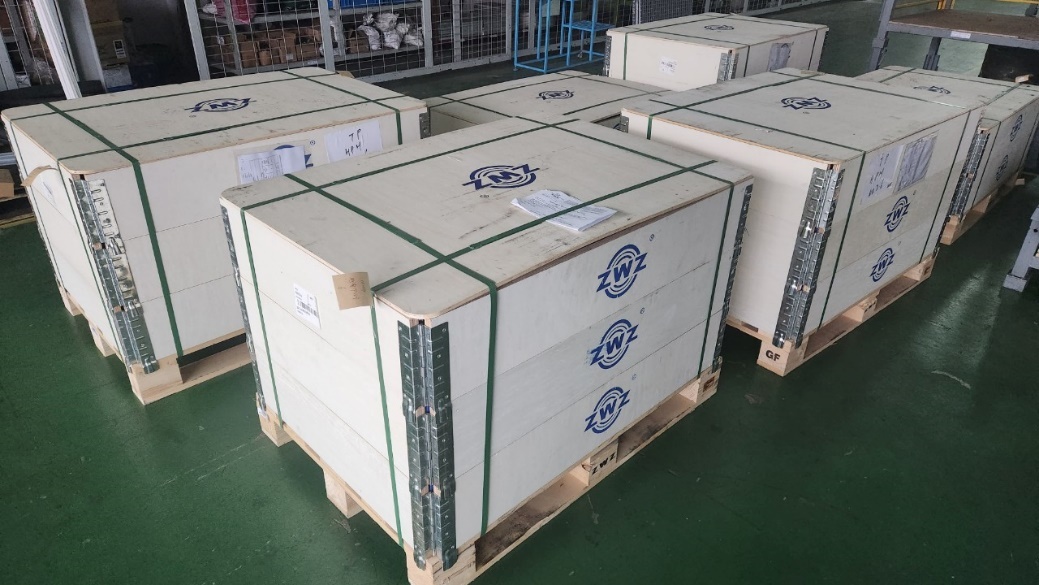
Therefore, we need to clearly determine whether the bearings used in the product are GENUINE? Genuine bearings carry the brand’s name, are exclusively produced or ordered according to the brand’s strict standards, and are imported directly from the brand. Only having all these factors ensures reliability for the user.
The final point to note is the assembly method of the bearings, shaft, and pulley to create the finished product.
Elevator pulley shafts typically have diameters of D50 and D60. With shafts of this size, manual assembly (hammering) will cause the bearing races to deform unevenly, leading to noisy bearings and an increased likelihood of faults during operation.
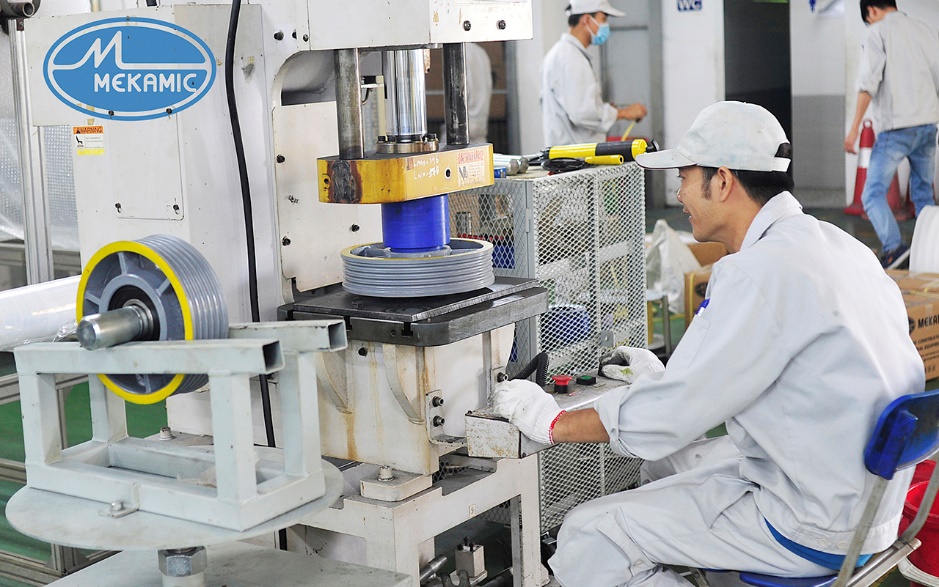
The standard method is that bearings should be installed using a (hydraulic) press with fixtures that accurately position the shaft, bore, and bearing. Using a press not only ensures an even distribution of force around the bearing race circumference but also controls the pressing stroke.
In summary, the factors for evaluating a high-quality elevator pulley product are as follows:
| Evaluation Criteria | Evaluation Features |
| Billet quality (cast iron) | – Is the hardness of the cast iron material up to standard? – Is the cast iron surface smooth and even? Has it been deburred and cleaned? |
| Machining accuracy | – Is the rope groove profile smooth, even, and up to standard? – Are the bearing bore dimensions on the pulley machined to the correct tolerances? – Is the shaft journal ground at the bearing mounting position? – Is the manufacturing process regularly controlled? |
| Bearings and bearing assembly | – Are the bearings genuine? – Are a press and fixtures used when installing the bearings into the pulley and shaft? |
The above are just a few preliminary points so that customers can quickly recognize product quality. Optimally, we should visit and evaluate directly at the manufacturer’s factory, which provides an overview and accurate assessment of the facilities, equipment, and especially the manufacturer’s quality management system. From there, you can make a suitable choice according to your requirements.